
Islamic stories
The People of the Elephant: An Islamic Story Retelling
Explore the traditional account of Abraha, Abd al-Muttalib, and the Kaaba, with an English rendering of Surah Al-Fil’s meanings and lessons to discuss.
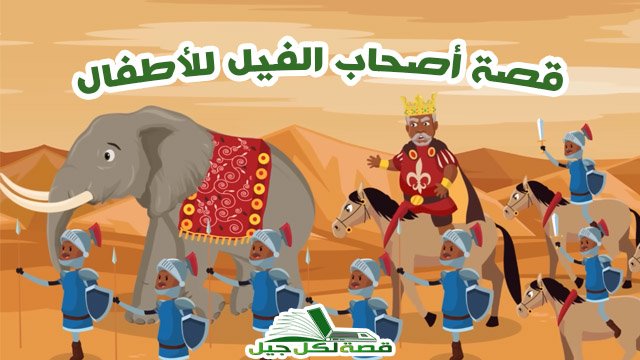
Today's story is The People of the Elephant, retold in accessible language from the Islamic account and its traditional narrative. We will explore the events associated with the Year of the Elephant and then reflect on their lessons.
The People of the Elephant
Long ago, an unjust ruler named Abraha lived in Yemen. He became jealous of the Arabs' yearly visits to the Kaaba and the deep respect they showed the Sacred House.
He decided to build his own great place of worship so that people would visit it instead of the Kaaba.
He completed the building, but when the time came for the Arabs' visits to Mecca, almost no one came to his new sanctuary.
This made him angrier. He planned to destroy the Kaaba so that people would be forced to come to his building in Yemen.
Abraha ordered his army to prepare and brought a large elephant, traditionally named Mahmud. They set out toward Mecca.
Along the way, the army seized horses and camels from communities it encountered. Near Mecca, it took two hundred camels belonging to Abd al-Muttalib, the grandfather of Prophet Muhammad, peace and blessings be upon him.
When Abd al-Muttalib heard, he went to Abraha's camp and was allowed inside his tent. Abraha was impressed by his dignity and appearance as a respected leader. They sat together, and Abd al-Muttalib began asking for the camels to be returned.
Abraha protested, “I thought you had come to ask me not to attack the Kaaba, yet you ask about your camels!”
Abd al-Muttalib answered, “I am responsible for the camels. The Kaaba has a Lord who will protect it.”
He returned to Mecca and, certain the army intended to attack, told his people to take their children and livestock into the mountains. He went to the Kaaba, prayed for God's protection, and then joined them.
Abraha's army began advancing. But as it approached the Kaaba, the elephant brought from Yemen, called Mahmud in the traditional narrative, refused to go farther.
They tried pulling, pushing, and striking him. Still he remained where he was, understood in the story as obeying God's command.
“What is happening?” Abraha demanded angrily. “The elephant we brought all this way to help destroy the Kaaba has sat down and will not move!”
Then came birds in successive groups, the ababil of Surah Al-Fil. They carried stones and cast them upon the army. The Qur'an describes the stones as sijjil, understood as hardened or baked clay.
The army was destroyed and scattered, and survivors fled. The Kaaba remained standing under God's protection. Abd al-Muttalib and his people returned, cleaned the sanctuary, and rejoiced that the threat had passed.
Islamic tradition identifies this as the year Prophet Muhammad, peace and blessings be upon him, was born. It is remembered as the Year of the Elephant.
That is the account of the Year of the Elephant, after which Mecca was safe from this attack.
The following is an English rendering of the meanings of Surah Al-Fil:
Have you not considered how your Lord dealt with the people of the elephant? (1)
Did He not bring their plan to failure? (2)
He sent birds against them in successive groups, (3)
striking them with stones of hardened clay, (4)
and left them like eaten crop stalks. (5)
We hope this retelling has given you something to think about. You can share your thoughts and tell us which story you would like to read next.
Lessons from The People of the Elephant
- The story presents tyranny and cruelty as paths to destruction.
- Jealousy can lead people to harmful choices, as it does in Abraha's plan.
- Abd al-Muttalib's answer expresses trust in God's protection of the Kaaba.
- His prayer is remembered as an example of seeking God's help.
- The defeat of a great army by birds and small stones emphasizes God's power.
- Mahmud's refusal to advance is understood in the traditional account as obedience to God.
- The account celebrates God's protection of the Sacred House.
- Its religious message is that victory depends on God rather than numbers and force alone.
- The Year of the Elephant is also remembered in Islamic tradition for the Prophet's birth.