
Islamic stories
Prophet Salih and the She-Camel: An Islamic Story Retelling
Read a retelling of Prophet Salih and Thamud, the she-camel, and the water-sharing agreement, with lessons about gratitude, promises, and compassion.
Welcome, friends of Qissaflow. Today we travel back through time to a story of a remarkable sign and an important lesson about trust and obedience to God. This retelling draws on the Qur'anic account of Prophet Salih and the traditional narrative surrounding it.
Our story is Prophet Salih and the She-Camel. God sent the camel as a sign to a powerful people who had become proud of their strength. Let us discover what happened.
Prophet Salih and the She-Camel
Long ago, after the destruction of the people of Ad, a powerful tribe called Thamud arose. They lived in a region known as Al-Hijr, in the northern Arabian Peninsula. They were strong and highly skilled builders, carving large homes and grand dwellings into rocky mountains.
God had blessed them with fresh water, green farmland, and fruit-bearing trees. Instead of thanking Him, however, they carved stone idols with their own hands and worshipped them.
God chose a man among them known for truthfulness, trustworthiness, and good character: Prophet Salih, peace be upon him. He spoke gently to his people. “Worship God. You have no deity other than Him. He created you and gave you these blessings. Leave the worship of stones that can neither help nor harm.”
Some poor and vulnerable people believed him. But wealthy, proud leaders mocked his message. In this traditional retelling, they pointed to a huge, solid rock in the mountain and challenged him: “If you really are a prophet sent by God, make this rock split open and bring out a large, living she-camel with the particular features we choose!”
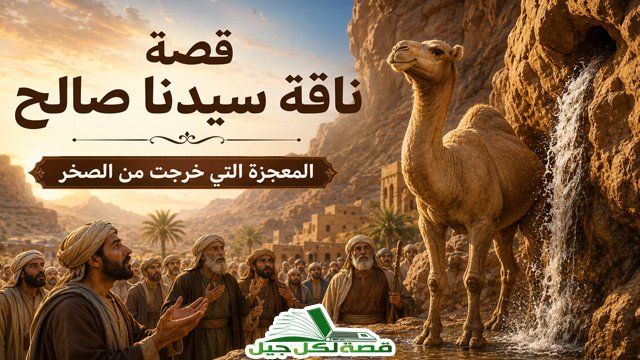
Salih did not despair. He prayed humbly that God would grant their request so they might accept guidance. Before their astonished eyes, the great rock split, and a magnificent, enormous she-camel emerged, just as they had demanded.
The people were amazed. Salih told them, “This is God's she-camel, sent as a sign for you. Let her graze on God's earth, and do not harm her.”
By God's command, Salih established a fair arrangement for the water. The people and the camel would take turns: one day for the camel to drink, and the next for the people and their animals. The traditional account tells that on her drinking day, she gave enough milk for everyone.
For a time, the people followed this arrangement. Believers looked on the camel with affection and thanked God. But the hostile leaders grew resentful. They disliked sharing the water and disregarded the milk she provided.
Nine wicked men gathered in the darkness and made a terrible decision. “We must kill the camel and have the well entirely to ourselves!” They ignored Salih's warning that harming her would bring God's punishment.
The following morning, they lay in wait as she went to drink. The worst among them struck her, and together they attacked and killed her without mercy.
When Salih learned what they had done, he was deeply saddened by their stubbornness and cruelty. “You have disobeyed God and killed His sign,” he told them. “Enjoy your homes for three more days. After that, the promised punishment will come.”
They mocked him and even planned to kill Salih himself. But God protected His prophet.
The first day passed, then the second and third. In this retelling, Salih and the believers leave the city by God's command. Then a terrifying, overwhelming blast came upon the wrongdoers, accompanied by a violent trembling of the earth.
The guilty people perished in their mountain homes. Neither their strength nor their grand stone dwellings protected them. Salih and those who believed with him were saved through God's mercy.
Read to your child: Abraha's Elephant: The Elephant Who Would Not Advance toward the Kaaba.
Lessons from Prophet Salih and the She-Camel
This story offers several important lessons within Islamic teaching:
- Be grateful for blessings. Thamud had strength and wealth but failed to show gratitude. The story encourages thankfulness for health, food, and safety.
- Beware of pride. Physical strength and fine homes do not excuse cruelty. Humility before God matters more than possessions.
- Keep agreements. The people agreed to share the water and not harm the camel, then broke their promise. Faithfulness to one's word is an important Muslim value.
- Do not join others in wrongdoing. The actions of a small group brought harm to the community. Choose companions carefully and refuse to participate in their harmful acts.
- Show compassion to animals. The camel was peaceful and useful. Her killing was a grave wrong. The story emphasizes mercy toward living creatures.