
Learning & values
The Little Match Girl: A Retelling with Themes to Discuss
Read this moving retelling of The Little Match Girl, followed by themes of compassion, poverty, hope, and the spiritual consolation within its tragic ending.
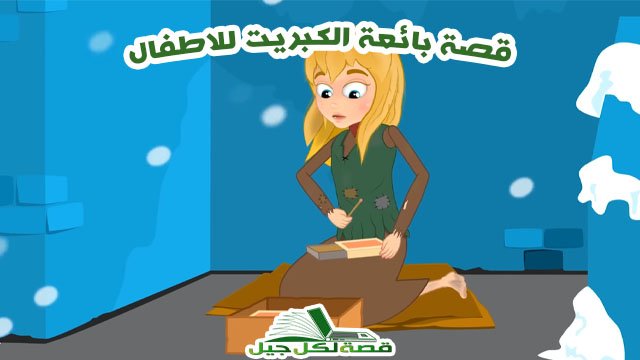
Children's stories can introduce important ideas through simple language and memorable events. At Qissaflow, we share many different kinds of tales to read and discuss.
Today we bring you The Little Match Girl, a famous, deeply moving story with a tragic ending. Let us read together and discover what happens to the child on a bitterly cold night.
The Little Match Girl
It was terribly cold. Night was approaching on the last day of the year, and snow fell thickly. In the darkness, a poor little girl wandered through the streets.
Her head and feet were bare. She had left home in shoes, but they were much too large, having belonged to her mother.
While running out of the way of two speeding carriages, she lost them. One could not be found. A boy took the other, saying he would use it as a cradle for a future baby.
She continued barefoot, her little feet red and blue with cold, walking slowly through the empty streets.
She carried matches in an old apron and another bundle in her hands. No one had bought any all day or given her even a little coin.
Hungry and freezing, she trembled as she walked, her face tired and sad. Snow settled on her long blond hair, curling softly over her shoulders, but she scarcely noticed.
Lights sparkled in windows, and the delicious smell of roast goose filled the air. It was New Year's Eve. Yes, she remembered that.
She sat in a corner between two houses, one standing farther out than the other. Curling up, she tucked her feet beneath her, but could find no warmth. The cold grew worse.
She dared not go home. She had sold no matches and earned nothing, and feared that her father would be angry and beat her.
Home was cold too. Beneath its roof, wind entered through cracks, despite the straw and old rags pushed into the largest holes.
Her hands were almost frozen. “Perhaps one match could warm my fingers a little,” she thought.
She drew one from the bundle and struck it against the wall. Scratch! A lovely little light flared like a candle. Holding her hand near it, she felt warmth.
She imagined a great iron stove with polished brass feet and beautiful decorations. Its fire glowed warmly, and she stretched out her feet. Suddenly, the match went out.
The stove disappeared. Only a burned matchstick remained. Sad, but longing to feel warm again, she struck another.
It lit the wall, which seemed to become transparent as a curtain. Beyond it, she saw a warm room and a table covered in a clean white cloth.
Delicious food stood there, including a hot roast goose stuffed with apples and dried plums. Suddenly, the goose jumped from its dish and walked toward her with a knife and fork in it.
The match went out. The goose vanished, and the cold wall returned. No food, table, or warmth remained, only darkness and cold.
She lit another match. This time, a magnificent Christmas tree appeared, larger and lovelier than the one she had seen through a rich merchant's window.
Colored decorations and little candles shone on its branches, with bright pictures like those displayed in shop windows. She reached toward them, and the match went out.
The tree lights seemed to rise into the sky and become stars. One fell, leaving a shining trail.
“Someone must have died,” she thought. Her beloved grandmother, the only person who had truly loved her, used to say, “When a star falls, a soul rises to God.”
Another match brought a glow around her. In its center stood her dear grandmother, clear and radiant, full of tenderness.
“Grandmother! Take me with you!” she cried joyfully. “I know you will disappear when the match goes out, like the stove, the roast goose, and the Christmas tree.”
She hurried to light all the remaining matches at once, desperate to keep her grandmother near. Their brightness seemed greater than the midday sun.
Her grandmother had never looked so warm or beautiful. She gathered the child into her arms, and in the story's final vision they rose in light and happiness, far above cold, hunger, and pain.
The vision carries them toward God, to a place of love and peace, beyond tears and freezing nights.
At dawn, the little girl still sat in the corner. She had frozen to death. A quiet smile rested on her lips, as though something beautiful had filled her last moments.
The new year's sunlight touched her face. She still held her matches, with burned sticks remaining in the box.
“Poor little thing. She tried to warm herself,” passersby said.
No one knew what she had seen. The story imagines her finding the warmth, mercy, and reunion with her grandmother that the cold world had denied her, ending its tragedy with a vision of lasting peace.
Read next: The Princess and the Pea.
Lessons and Themes in The Little Match Girl
- Compassion can change a life. Practical help from a passerby might have saved the child. The story calls attention to people in need, especially during hardship.
- Poverty does not mean laziness. The girl was trying to earn money by selling matches. We should not judge someone without understanding their struggle.
- Imagination and hope can offer comfort. Her visions express the warmth, food, joy, and affection missing from her life.
- Love remains meaningful after separation. Her vision of her grandmother shows how deeply she longs for tenderness and remembers being loved.
- Consolation within a tragic ending. The story uses faith and the image of a peaceful reunion to offer spiritual comfort after suffering, while the child's death remains a tragedy.